
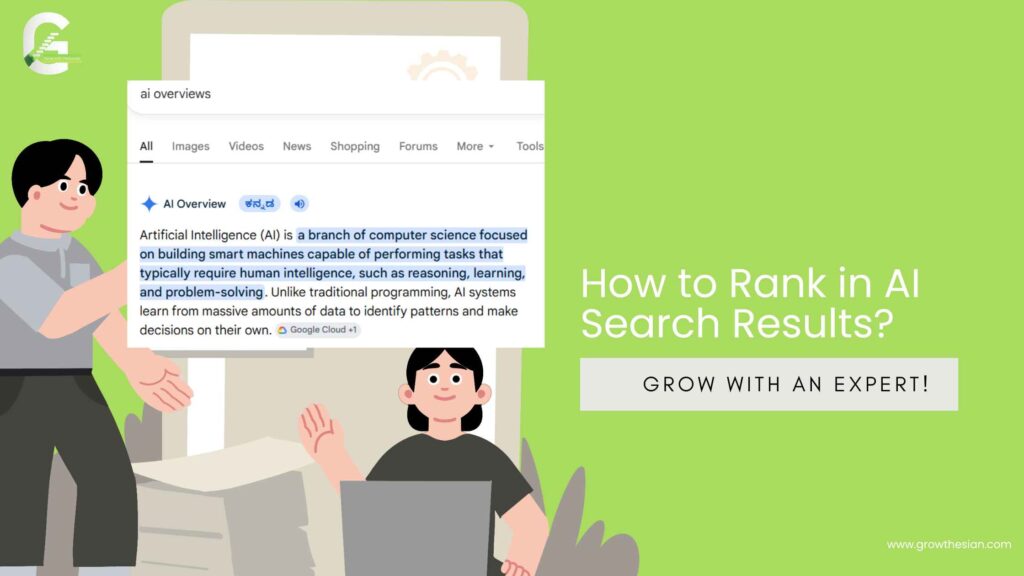
Two years ago, most businesses focused only on ranking on the first page of Google. But within less than 1,000 days, the search landscape has changed dramatically. Today, businesses are no longer asking only “How do I rank on Google?” Instead, they want to know how to get featured in Google AI Overview and become visible inside AI-powered search results.
As Google continues integrating AI into search, websites must now optimize content not just for users, but also for Large Language Models (LLMs) and AI systems that generate summaries directly inside search results. According to Lily Ray, Google increasingly rewards content that demonstrates real expertise, authority, and trustworthiness. This is becoming even more important in AI-generated search experiences.
In this guide, you will learn:
- Best practices for AI search optimization
- How to rank in Google AI Overview
- Important AI Overview ranking factors
- How AI systems read content
- Real-world AI SEO examples
Quick AI Summary Block
Google AI Overview SEO is the process of optimizing website content so Google’s AI systems can easily understand, extract, and feature your content inside AI-generated search summaries. Websites with strong structure, EEAT signals, clear answers, and topical authority have a higher chance of appearing in AI-powered search results.
What is Google AI Overview?
Google AI Overview is an AI-generated summary displayed at the top of selected search results. Instead of showing only traditional blue links, Google combines information from multiple trusted sources to create a summarized answer for users.
To appear in Google AI Overview, your content usually needs to:
- Rank well organically
- Match search intent clearly
- Be easy to scan
- Provide trustworthy information
- Include strong SEO and EEAT signals
Why Google AI Overview Matters?
AI-powered search is changing user behavior rapidly.
Instead of opening multiple websites, users now often get answers directly inside AI summaries. This means businesses must optimize for:
- AI visibility
- Brand mentions
- AI citations
- Conversational search
Websites that adapt early may gain a significant visibility advantage in organic search.
Example of Fan-Out Search Intent
If someone searches:
- “How to rank in Google AI Overview”
Google may also analyze:
- What is Google AI Overview?
- How does AI search work?
- How to optimize content for AI search?
- Does schema help AI SEO?
- What are AI Overview ranking factors?
If your article answers all these naturally, your chances of appearing in AI summaries improve significantly.
Real-Life Example
A digital marketing agency publishing only generic SEO blogs may struggle to appear in AI search results.
However, after restructuring content using:
- FAQ sections
- AI summary blocks
- Internal linking
- Real case studies
- Conversational formatting
the website may start receiving better visibility for AI-powered searches because Google prefers structured and experience-driven content.
Use the AI Summary Block Technique
AI systems scan web pages for concise and extractable information blocks.
What is an AI Summary Block?
An AI Summary Block is a short paragraph placed directly below a heading that gives a direct answer to the topic.
Example
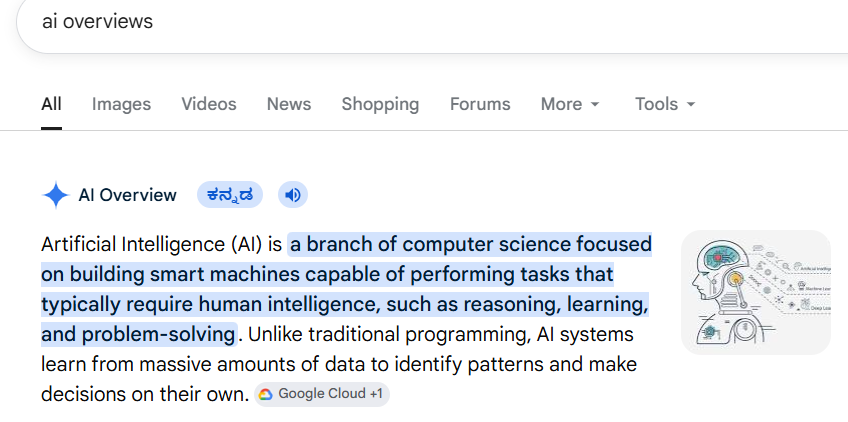
AI search optimization is the process of structuring website content so AI systems can easily understand, summarize, and present it inside AI-generated search results. Clear formatting, concise explanations, and trustworthy information increase the chances of AI visibility.
This structure works because:
- Users understand information quickly
- AI systems can easily extract answers
- Google may reuse these sections inside AI Overviews
Best Practices for AI Summary Blocks
Keep It Short
Aim for:
- 40–60 words
- Clear explanations
- One direct answer
Use Bold Keywords Naturally
Important keywords like:
- Google AI Overview SEO
- SEO for AI search
- AI search optimization
should appear naturally inside summaries.
Avoid Long Introductions
AI systems prefer direct and useful answers over lengthy introductions.
Build a Highly Scannable Content Structure
If AI systems cannot easily understand your page structure, they may ignore your content completely.
Use Proper Heading Hierarchy
A strong content structure should follow:
- H1 → Main topic
- H2 → Major sections
- H3 → Subtopics
- H4–H6 → Supporting details
This helps:
- Search engines
- AI systems
- Users
understand content relationships clearly.
Use Lists and Tables
Google AI Overviews frequently extract information from:
- Tables
- Bullet lists
- Numbered steps
- Comparison sections
Example Comparison Table
| Traditional SEO | Google AI Overview SEO |
| Focuses on rankings | Focuses on AI extraction |
| Keyword-heavy strategy | Intent-focused strategy |
| Click optimization | AI visibility optimization |
| Metadata importance | Structure importance |
This type of formatting improves machine readability significantly.
Strengthen E-E-A-T Signals
Google prioritizes content that demonstrates:
- Experience
- Expertise
- Authoritativeness
- Trustworthiness
This is critical for SEO for AI search because AI systems try to avoid generic or low-quality information.
Add First-Hand Experience
Instead of writing generic advice:
- Add screenshots
- Share campaign results
- Include workflows
- Mention actual experiences
Example
A local business website restructuring blog content using:
- FAQ schema
- AI summary blocks
- Conversational headings
- Experience-based examples
may notice higher search impressions within a few weeks because AI systems prefer content with clear practical value.
Implement Schema Markup
Schema markup helps search engines understand your content better.
Best Schema Types for AI Overview SEO
FAQ Schema
Helps Google understand question-answer content.
Article Schema
Provides article details like:
- Author
- Date
- Topic
- Publisher
How To Schema
Useful for step-by-step guides.
Breadcrumb Schema
Improves page structure understanding.
Schema improves machine readability and increases the chances of AI extraction.
Optimize for Conversational Search
Search behavior is becoming more conversational.
Users now search like:
- “How can I optimize content for Google AI Overview?”
- “How does AI SEO work?”
- “How do websites appear in AI search results?”
How to Write Conversationally
H4: Use Simple Language
Avoid unnecessary technical complexity.
H4: Answer Questions Directly
Provide immediate value.
H4: Write Naturally
Content should feel human, not robotic.
This improves readability for:
- Users
- Voice search
- AI systems
Common Mistakes That Prevent AI Overview Rankings
Many websites fail to appear in AI Overviews because of avoidable SEO mistakes.
Keyword Stuffing
Overusing keywords reduces readability and trust.
Poor Page Structure
Messy heading hierarchy confuses AI systems.
Thin Content
Short and low-value content struggles to rank.
Generic AI-Written Content
AI-generated content without human expertise rarely builds authority.
No Schema Markup
Without schema, Google receives less context about your content.
Real Example of AI SEO Optimization
A SaaS company publishing generic SEO articles struggled to gain visibility in AI-powered search results.
After optimizing content using:
- Structured headings
- FAQ schema
- Summary blocks
- Internal links
- Experience-driven examples
the company noticed:
- Improved search impressions
- Better long-tail rankings
- Higher featured snippet visibility
- Increased engagement time
This demonstrates how AI-friendly formatting combined with real expertise can improve visibility significantly.
Frequently Asked Questions
What is Google AI Overview?
Google AI Overview is an AI-generated search summary that appears above traditional search results and provides quick answers using information from multiple trusted websites.
How do websites appear in Google AI Overview?
Websites appear in AI Overviews by publishing structured, trustworthy, and highly relevant content that matches user intent clearly.
Does schema markup help AI SEO?
Yes. Schema markup helps search engines understand your content better and improves the chances of AI systems extracting your information.
What are the most important AI Overview ranking factors?
Some of the most important ranking factors include:
- Content quality
- EEAT signals
- User intent matching
- Content structure
- Technical SEO
- Topical authority
Is traditional SEO still important for AI search?
Yes. Traditional SEO still matters because most AI Overviews pull information from websites already ranking organically.
About the Author
Growthesian specializes in SEO, AI search optimization, and digital marketing strategies designed for modern search experiences. The team focuses on helping businesses improve visibility through structured content, AI-friendly SEO practices, and topical authority building.
Services include:
- AI SEO optimization
- Content strategy
- Technical SEO
- Schema implementation
- Organic traffic growth
Conclusion
Ranking in Google AI Overview requires more than traditional SEO. Today, businesses must create content that works effectively for both humans and AI systems.
To improve your AI search visibility:
- Match user intent deeply
- Build strong topical authority
- Use AI summary blocks
- Implement schema markup
- Demonstrate real expertise
- Structure content clearly
- Optimize for conversational search
As AI-powered search continues evolving, businesses that adapt early will gain a major competitive advantage in organic visibility and AI-generated search exposure.